

INTRODUCTION
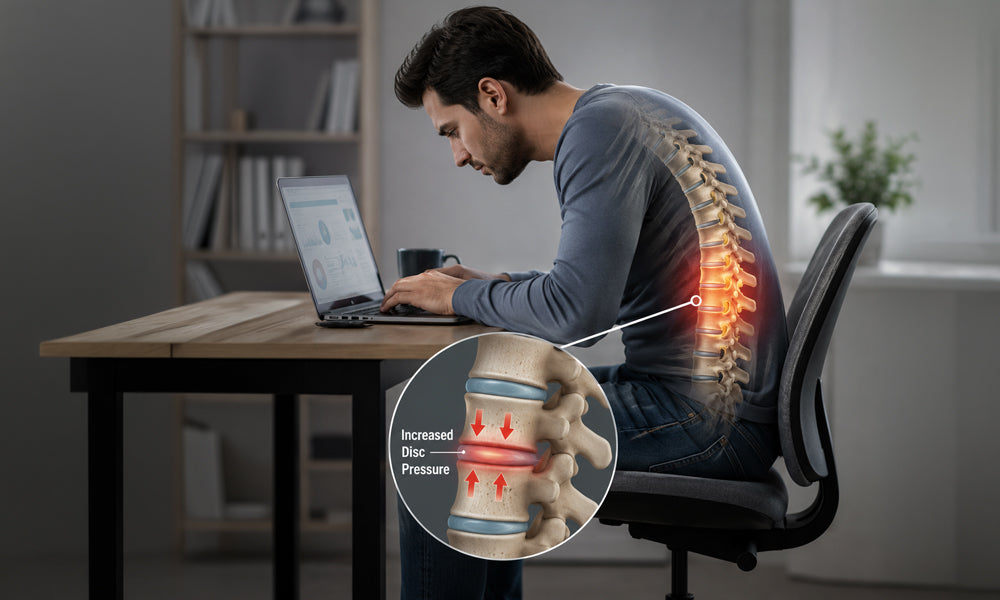
Prolonged sitting is one of the most common causes of chronic back pain today. With remote work, desk jobs, and long commutes now a daily reality for many people, the spine spends more time under pressure than it was ever designed to handle. The human body isn't built to stay still for eight or more hours a day, and it's the back that usually feels it first. Left unaddressed, sitting-related back pain can affect posture, mobility, sleep, and overall quality of life. This guide covers the causes, prevention strategies, relief tips, and warning signs of sitting-related back pain, so whether your discomfort is mild and occasional or persistent and disruptive, you'll know what small daily changes can make a real difference.
WHY DOES SITTING TOO LONG CAUSE BACK PAIN?
The spine is built for movement, not for hours of static positioning. Sitting for extended periods affects your body in several ways:
- Increased Spinal Pressure — Sitting puts more pressure on spinal discs than standing or lying down, which can accelerate disc degeneration over time
- Weakened Core and Back Muscles — Long sitting weakens the core, glutes, and back extensors that support your spine, reducing stability
- Poor Posture — Slouching rounds the shoulders and curves the lower back, placing uneven stress on the spine
- Tight Hip Flexors — Shortened hip flexors pull on the pelvis and lower back, altering spinal alignment
- Reduced Blood Flow — Staying still limits circulation, slowing nutrient and oxygen delivery to spinal tissue
- Nerve Compression — Poor posture while sitting can compress nerves, causing pain, numbness, or tingling down the legs (often linked to sciatica)
COMMON SYMPTOMS OF SITTING-RELATED BACK PAIN
- Dull, aching pain in the lower or upper back
- Stiffness that worsens after standing up
- Muscle tightness in the back, hips, or shoulders
- Sharp pain when transitioning from sitting to standing
- Radiating pain, numbness, or tingling down the legs
- Rounded shoulders or forward head posture
- Reduced flexibility in the hips and hamstrings
WHO IS MOST AT RISK?
- Office goers and remote employees at a desk most of the day
- Drivers and delivery workers who sit for hours behind the wheel
- Students sitting through long lectures or study sessions
- People with sedentary lifestyles and little physical activity
- Individuals with pre-existing spinal conditions, such as herniated discs or scoliosis
- People recovering from a back or hip injury who spend extended time resting in a seated position
- Individuals who are overweight, as extra body weight adds further strain on seated posture
HOW TO PREVENT BACK PAIN FROM SITTING
- Set Up an Ergonomic Workspace — Use a chair with lumbar support, keep feet flat on the floor, and set your monitor at eye level
- Take Regular Movement Breaks — Stand and move for a few minutes every 30–60 minutes
- Practice Good Sitting Posture — Back against the chair, shoulders relaxed, ears aligned over shoulders; avoid crossing legs for long periods
- Strengthen Your Core — Planks, bridges, and bird-dogs help support the spine
- Stretch Regularly — Loosen tight hip flexors, hamstrings, and lower back muscles daily
- Use a Standing Desk — Alternate sitting and standing to reduce continuous spinal pressure
- Stay Active Outside of Work — Even 20–30 minutes of daily walking helps
- Maintain a Healthy Weight — Extra weight, especially around the midsection, strains the lower back
RELIEF TIPS FOR BACK PAIN FROM SITTING
- Heat or Cold Therapy — Heat relaxes tight muscles; cold reduces inflammation and numbs acute pain
- Gentle Stretches — Seated spinal twist, knee-to-chest stretch, or cat-cow pose ease tension
- Lumbar Support Cushion — Helps maintain your spine's natural curve while seated
- Deep Breathing and Relaxation — Reduces stress-related muscle tightness
- Massage Therapy — Releases tight muscles and improves circulation
- Over-the-Counter Pain Relief
- Walking Breaks — Even a few minutes resets posture and relieves stiffness
- Physical Therapy — A therapist can build a personalized plan to correct imbalances and strengthen supporting muscles
- Mindful Movement — Simple activities like yoga or tai chi combine gentle stretching with body awareness to ease tension
BEST STRETCHES TO COUNTER SITTING-RELATED BACK PAIN
- Cat-Cow Stretch — improves spinal flexibility
- Knee-to-Chest Stretch — loosens the lower back and glutes
- Seated Spinal Twist — releases tension along the spine
- Hip Flexor Stretch — counters tightness from sitting
- Child's Pose — gently stretches the lower back
- Hamstring Stretch — reduces tightness that pulls on the lower back
Hold each stretch for 20–30 seconds, a few times a day, for best results.
CONSULT A HEALTHCARE PROFESSIONAL
Most sitting-related back pain improves with posture correction, movement, and stretching. See a healthcare professional if you experience:
- Persistent pain lasting more than two to three weeks despite self-care
- Numbness, tingling, or weakness in the legs or feet
- Pain that radiates down one or both legs (possible sciatica or nerve compression)
- Sharp pain when moving from sitting to standing
- Stiffness that worsens instead of improving with movement
- Pain following an injury, fall, or accident
- Loss of bladder or bowel control — seek immediate emergency care
- Back pain with fever, unexplained weight loss, or night sweats
- Symptoms disrupting sleep or daily activities
A doctor, physical therapist, or spine specialist can pinpoint whether your pain is muscular, postural, or related to a disc or nerve issue, and build a treatment plan suited to your needs.
LONG-TERM EFFECTS OF IGNORING SITTING-RELATED BACK PAIN
- Chronic Pain — Untreated strain can develop into ongoing, harder-to-treat lower back pain
- Postural Imbalances — Continued slouching can lead to lasting changes in spinal curvature
- Reduced Mobility — Tight hips and weak core muscles limit flexibility and range of motion over time
- Disc Degeneration — Constant pressure on spinal discs can speed up wear and tear
- Nerve-Related Complications — Ongoing compression can worsen sciatica-like symptoms, including numbness and weakness
- Impact on Daily Life — Persistent pain can interfere with work productivity, exercise, and sleep quality
Addressing sitting-related back pain early, through posture correction, movement, and stretching, helps prevent these long-term complications.
FREQUENTLY ASKED QUESTIONS
1. How long is too long to sit without a break?
Stand or move every 30 to 60 minutes to ease spinal pressure and support circulation.
2. Can a standing desk fully prevent back pain?
Standing desks help by encouraging movement, but standing too long without breaks can also cause discomfort. Alternating between sitting and standing works best.
3. Does a supportive chair really make a difference?
Yes — an ergonomic chair with proper lumbar support reduces strain on the lower back and supports better posture.
4. Is it normal to feel stiff after sitting for a long time?
Mild stiffness is common, but persistent or worsening pain shouldn't be ignored and may need professional evaluation.
5. Can stretching alone fix sitting-related back pain?
Stretching helps relieve tension, but lasting relief usually requires a combination of posture correction, movement breaks, and core strengthening.
6. Is sitting-related back pain reversible?
In most cases, yes. With consistent lifestyle changes and, if needed, professional treatment, symptoms typically improve significantly over time.
Healthcare Disclaimer:
This article is intended for educational and informational purposes only and should not be considered a substitute for professional medical advice, diagnosis, or treatment. Individuals experiencing persistent, worsening, or unexplained symptoms should consult a qualified healthcare professional for personalised assessment and management.


 Ask Our Experts
 Live Video Shopping
 Shop on call
